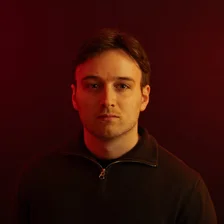
It is time to understand our systems again.
During my studies (BSc Computer Science, MSc Computer Security), I've learned to appreciate rigor. From physical address translations in DRAM to virtual memory management by your OS, and from micro-architectural memory leaks to advanced compiler-based mitigations: only when you take the time to understand topics thoroughly, you can meaningfully reason about them.
With this thoroughness came a deep appreciation for the theoretical side of computer science. Yet, what made it really click for me is how easy (and rewarding) it can be to make topics tangible. A laptop and (sometimes a lot of) motivation is all you need. Using my theoretical skills to solve real problems in a creative way has always been the appeal for me, and I quickly turned it into work.
At the time of writing, I've been working as a contractor for over 6 years, architecting and building systems, and leading teams at different clients. I like to be at both ends: directly in touch with the end-user, and deep in the technical land with the engineers, solving difficult problems with motivated people.
At Defined Once, I focus on (re)building systems in Rust. It is no silver bullet, but when applied correctly, it can make it easier to future proof our systems. We owe that to the legends on whose shoulders we stand: those who stood at the cradle of our digital age and are putting in so much effort to maintain it. By building on the knowledge of many decades of systems engineering, we can improve the systems that we all rely on today. I think that it's the task of our generation.
Curriculum Vitae
My passion lies in systems engineering work (specifically in Rust and Go), but I have extensive experience with building backends (from Axum to Nest), front-ends (from jQuery to Svelte), deployment pipelines (from Github Actions to Kubernetes, with Terraform and Pulumi) and low-level embedded systems. I've written my fair share of C :)
Career
-
From 2017 until 2023, I have been active as a freelance developer and technical support. This started as "PChulp Castricum", where I helped to solve technical problems on location. This mostly involved setting up WiFi, restoring bricked Windows setups and installing printers (it's always the printers) but from 2020 onwards this has shifted towards just software development.
-
Since 2023, I am the founder of LJZ Digital Solutions B.V. at which I lead, build and consult the development of digital solutions for business and education. I was in charge of the contact with clients, managing projects and leading teams up to 5 people. I focus on embedded and back-end engineering, infrastructure and DevOps (Rust, Go, Docker, Kubernetes, Terraform) but am not afraid to get my hands dirty as a full-stack developer when needed.
-
In 2026, LJZ has become part of Defined Once Engineering B.V., which I co-founded with Max Gallup. At Defined Once, we focus on systems engineering work for companies that need their foundations ported to the 21st century.
As volunteering work, I help organizing national and regional elections in my hometown.
Education
I have received my BSc Computer Science in 2023 (cum laude) and am finishing up my MSc Computer Security now, both at the Vrije Universiteit Amsterdam. In between studies, I've taken a gap year to focus on building LJZ and client work.
Side Projects
I've been active in many projects since I was young: from building a small scale social network in PHP to deploying browser-based binary explorers. You can find some of my open source work on Codeberg. If you're curious about my closed-source work for clients, please get in touch. A few fun projects that deserve highlighting:
-
In 2017, I first got into contact with programming, by developing an invoicing and customer management system in PHP. I like to put it on the list, because it did not only teach me the fundamentals of PHP, JavaScript and HTML, but sparked my interest in programming in general.
-
In 2022, I worked as a teaching assistant for the VU's Systems Programming Project. To help me explain the important concepts to students, I built IJVMore, an IJVM inspector, debugger and scripting tool that runs in your browser. In 2025 I rebuilt the project in Rust to get some experience with WebAssembly, but that version is not deployed yet.
-
In 2021, I first got in touch with building operating systems by building my own memory allocator. In 2025 I have built my own kernel from scratch. Both projects cannot be shared publicly, but I can show them when interested.
-
Since 2017, I have been participating in Google Hashcode at the STORM hub in Amsterdam. I always enjoyed these nights of puzzle solving, coding and pizza. Unfortunately, Google discontinued Hashcode. Maybe it wouldn't be as fun in the AI era anyway...
Publications
-
Integrating Small-scale Autonomous Vehicles in CS Education: An Experience Report. Natalia Silvis-Cividjian, Joshua Kenyon, Maximilian Gallup, Elias Groot, Hugo van Wezenbeek, Eduardo Lira-Cossio, and Niels Althuisius. 2025. In Proceedings of the 30th ACM Conference on Innovation and Technology in Computer Science Education V. 1 (ITiCSE 2025). Association for Computing Machinery, New York, NY, USA, 235-241. https://doi.org/10.1145/3724363.3729078
-
The Story of the VU-Rover and its Many Capstone Projects. Elias Groot, Maximilian Gallup, Darian Janevski, Joshua Kenyon, and Natalia Silvis-Cividjian. 2025. In Proceedings of the 30th ACM Conference on Innovation and Technology in Computer Science Education V. 2 (ITiCSE 2025). Association for Computing Machinery, New York, NY, USA, 723-724. https://doi.org/10.1145/3724389.3731264